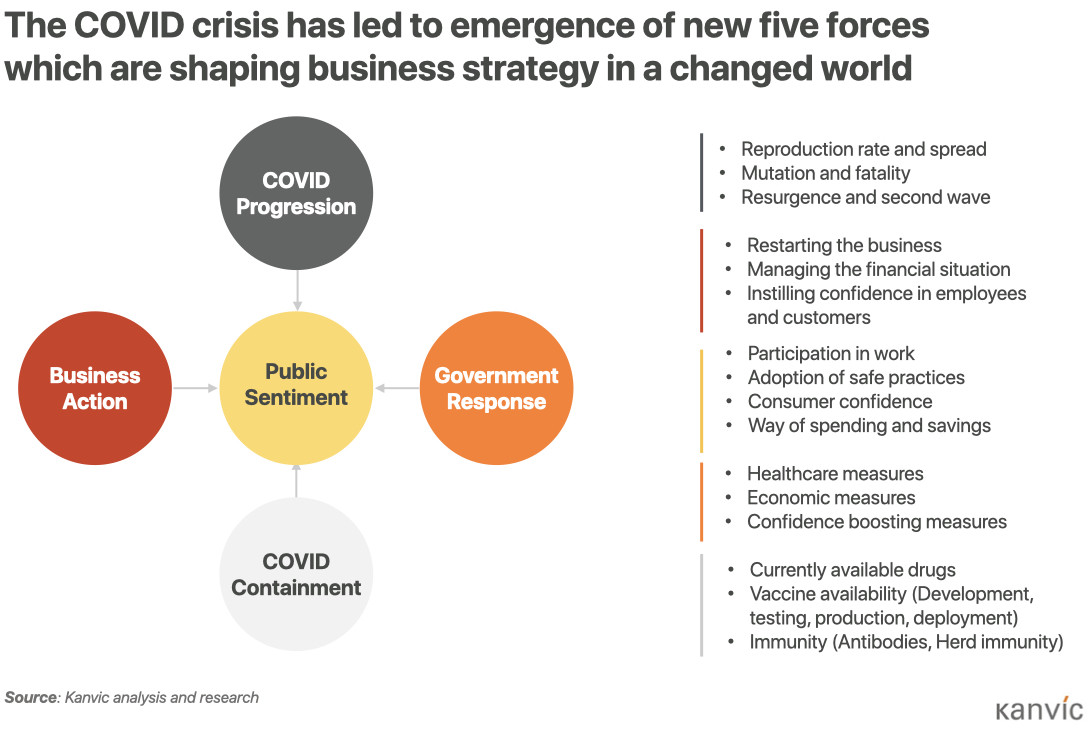
The new five forces are a critical consideration for strategic analysis and decision making during the crisis for three important reasons.
First, in the current moment, the key strategic questions are how long will the crisis last and how big will be the impact (both positive and negative), rather than how do I gain a position of advantage. However, business leaders are currently operating in a fog of uncertainty with very little visibility over how the virus will play out and what the second-order effects on the economy will be. Therefore strategic decision-making requires a framework that can help dissipate this fog by identifying and disaggregating the key drivers of uncertainty. The new five forces provide such a framework.
Second, while Porter's five forces are well-tuned to help us understand competitive forces in an industry they do not account for how strategy should adapt to sudden and profound demand shocks that we have witnessed during the current crisis that upend established market dynamics. Therefore anticipating and responding to these kinds of highly disruptive events that live outside Porter's framework needs to be at the heart of business strategy in the present moment and going forward. And here again, the new five forces provide a template for real-time monitoring of an incredibly dynamic external environment.
Third, when the current COVID crisis eventually wanes, it is unlikely that we will land up where we left off. The virus will result in enduring changes to how government, businesses, and consumers behave. Consequently, companies need to start monitoring these shifts today to start building a clearer picture of the future business landscape. By capturing the evolving behaviours of the key actors in the economy the new five forces provide us with a window into the post-COVID world.
The new five forces of strategy
In light of the importance of complementing Porter's analysis with the new five forces, it is vital that leaders understand each of them, track their underlying drivers, and use them to build scenarios to inform their strategic decision-making during the crisis. We discuss each of these new five forces in turn along with their implications for business.
COVID progression
The first of the new five forces to monitor is the progression of the virus itself. The rate of case growth, hospitalisation, and mortality is a crucial driver of government policies and public behaviour. As we have seen across Europe and in parts of India in recent weeks, any uptick in cases can rapidly lead to renewed restrictions with implications for both supply and demand. On the flip side, the sense that the virus is under control can give the confidence to workers to return to offices and to consumers to go into the marketplace. Therefore companies need to closely track COVID progression at a highly granular level as outbreaks and the response are often localised, affecting specific regions, countries, or cities where a business may operate.
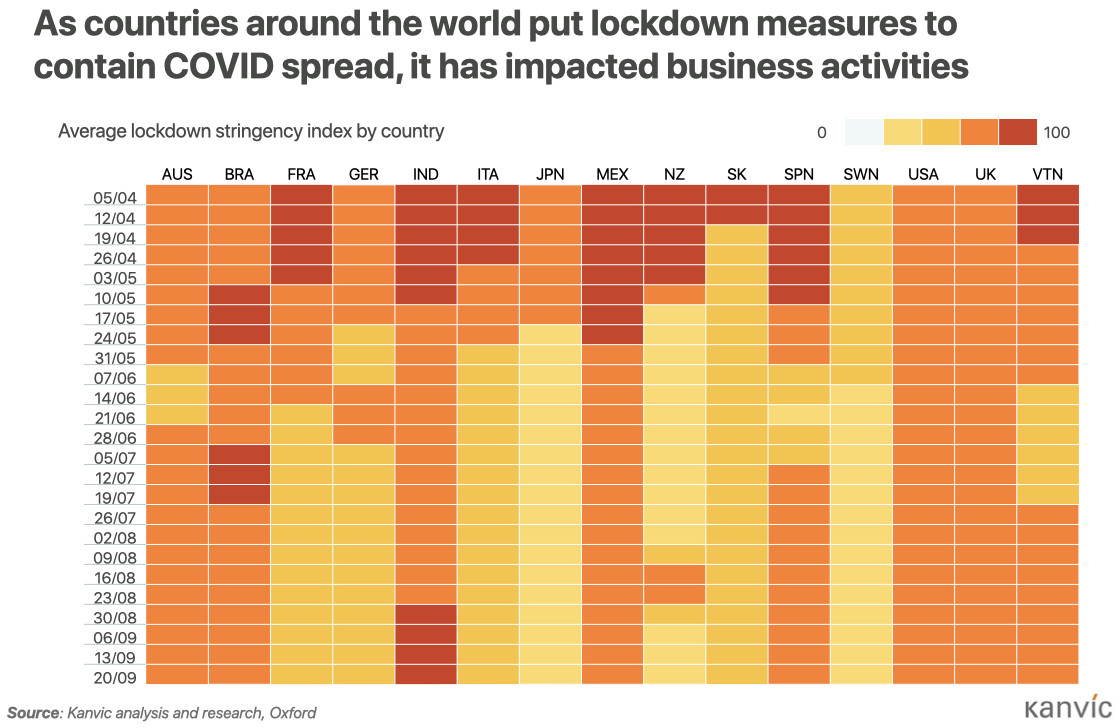
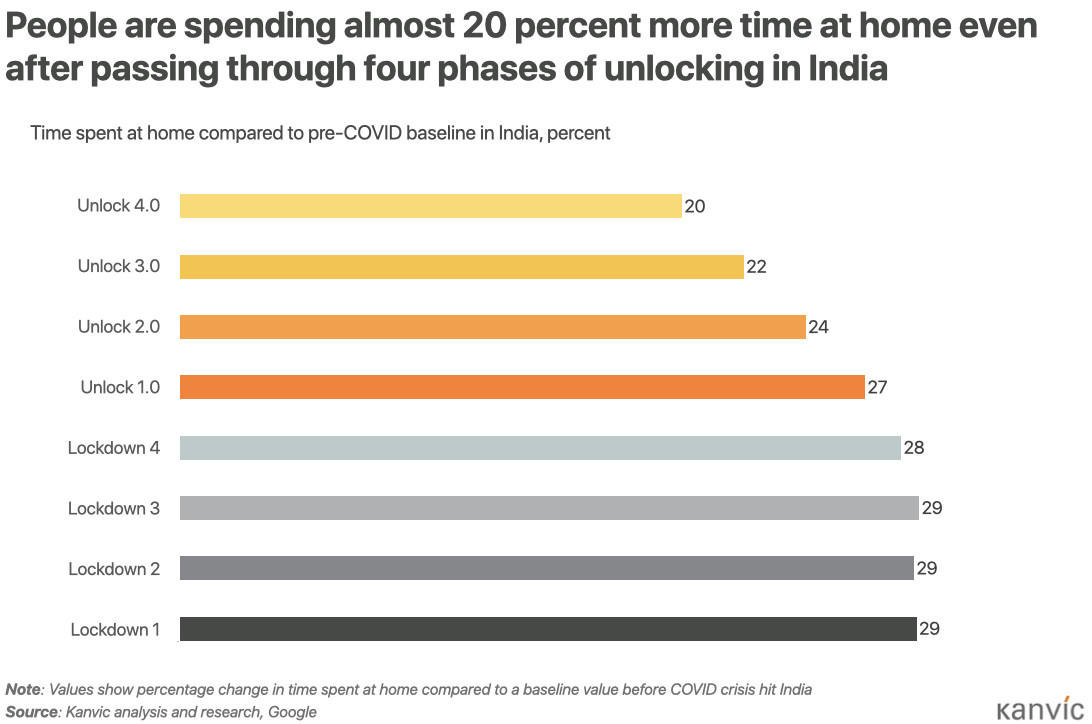
To illustrate the importance of this point recent Kanvic analysis found that although India has now entered its fourth phase of 'Unlock', the country's lockdown stringency index actually rose in July and August due to the effect of local lockdowns in various regions.
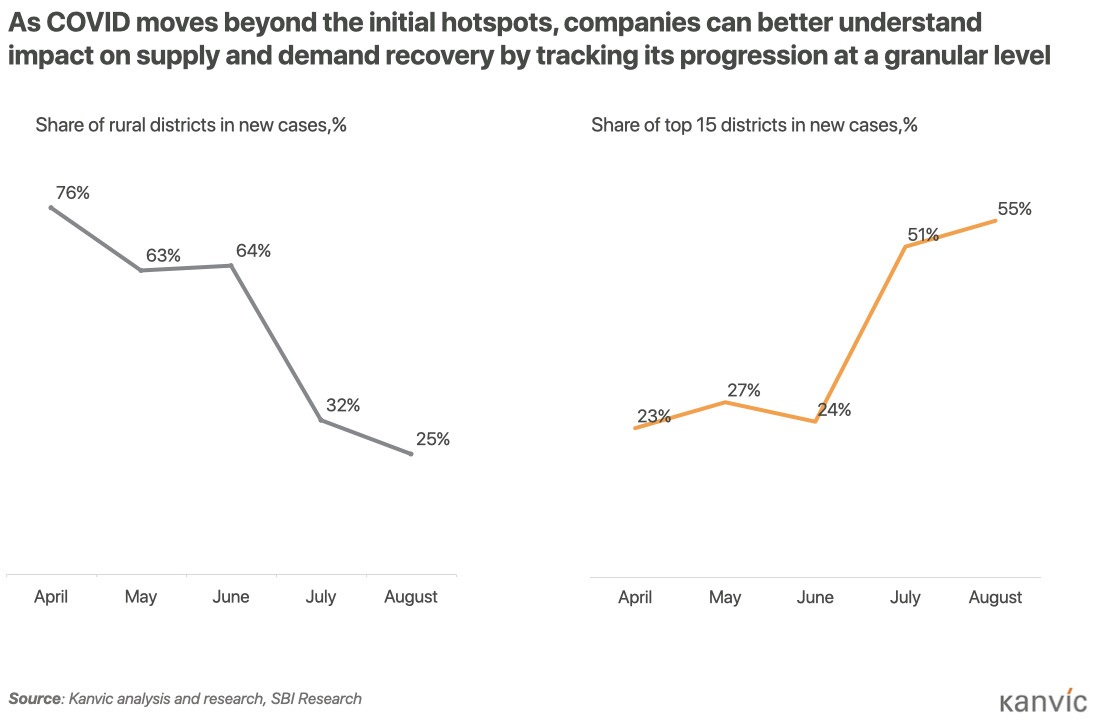
Furthermore, a granular approach can reveal other important trends such as the shift in virus hotspots from urban to rural areas. In April rural districts of India accounted for only 23% of new cases while by August this had risen to 55%. The impact of the virus on a rural population served by much weaker healthcare infrastructure could have a major impact on the fortunes of the agricultural sector which was one of the few bright spots in the economy in the first half of the year.